
Mobile Service
Auto Electrical Faults, Traced at Your Location
Parasitic draws, wiring damage, sensor faults, ABS and airbag lights. We trace the circuit at your home or job site instead of guessing at parts.
What we do
What the job covers
Electrical faults are the ones that get parts thrown at them. A light comes on, a code gets read, a part gets ordered, the light comes back. Nobody measured anything.
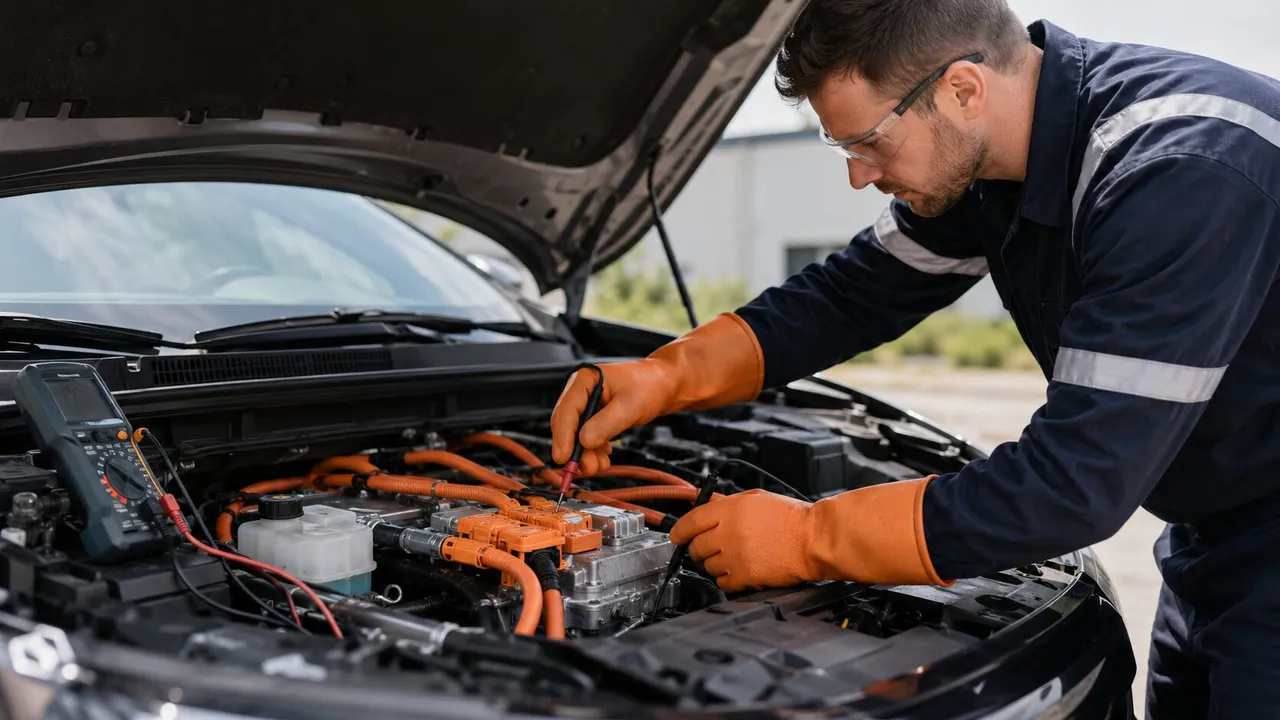
We measure. Voltage drop across the cable, current draw with the car asleep, live data from the sensor while the wheel turns. The reading tells us which of the four possible causes is the real one, and you see the number that made the call before you approve any work.
Parasitic draw testing
The battery is flat every third morning and the charging system tests fine. We put a meter in the circuit, let the modules go to sleep and pull fuses until the draw drops, then chase it to the component.
ABS and wheel speed faults
Code scan, live wheel speed data on a road test, sensor and connector testing, tone ring inspection, and module work where the module is the actual fault.
Airbag and SRS lights
SRS code scan, clockspring and seat harness connector checks under the seats, and module reset after the underlying fault is repaired.
Wiring and harness repair
Chafed looms, corroded connectors, broken pins, rodent damage and failed aftermarket splices. Cut, crimp, solder, seal and re-loom.
Sensors and switches
Crank and cam sensors, wheel speed sensors, temperature sensors, brake and door switches. We test the circuit before condemning the sensor.
Lighting and accessory circuits
Headlights that dim, trailer wiring, reverse camera faults, and the fuse that keeps blowing for a reason nobody found.
In your words
What people tell us before we arrive
The battery is dead every couple of mornings but it tests fine
My ABS light came on and now the traction light is on too
The airbag light stays on and it won't reset
The dash lights flicker when I go over a bump
The radio and the power windows cut out at the same time
A fuse keeps blowing and I don't know why
Any of these and we can tell you what it is before we touch a wheel. Send us the symptom and we will bring the parts.
Setting it straight
An ABS light almost never means the ABS module is bad
The light says the system switched itself off. It does not say which part made it. On the cars we see in Pinellas County, the fault is usually a wheel speed sensor, the connector behind the wheel liner that has spent five years in salt spray, or a tone ring with rust flaking off the teeth. Every one of those reads as an ABS fault to a code reader, and every one of them is a fraction of the work of a module. We scan for the code, then read live wheel speed data on a road test and watch which corner drops out. That tells us whether we are looking at a sensor, a connector, a harness break or a module, and only the last one is a module job. If the module genuinely has failed, that is a real repair and we do it. It is just not where the money usually goes.
The visit
How an on-site repair runs
Tell us what fails and when
Year, make, model, the warning light, and what the car was doing when it started. After a rainstorm, over a bump and after it sits overnight are three different faults, and the timing narrows it before we arrive.
We test the circuit on site
Scan for stored and live codes, then measure. Voltage drop, current draw, resistance to ground, live data on a road test where the fault needs the car moving. You get the reading and what it means, then the price. The estimate is free.
We repair and verify
Splice, solder, seal and re-loom, or replace the component the test condemned. Then we clear the code, run the drive cycle and confirm it stays off before we leave.
We repair the harness before we replace it
A chafed wire, a green connector or a broken pin does not need a new harness. It needs the damaged section cut out, a proper crimp and solder joint, adhesive-lined heat shrink and the loom taped back the way the factory routed it. That repair outlasts the car. We replace a harness section only when the damage runs further than a splice can reach, which usually means rodent damage across a whole loom or a burnt section after a short. On modules, the same rule: an ABS or body control module gets tested and, where the fault is a known internal one, sent for repair rather than swapped for a new unit that needs programming and a security relearn.
Electrical faults hide from shops and show up in your driveway
A parasitic draw needs the car to sit undisturbed while the modules time out and go to sleep. That is forty minutes of nothing happening, and it is billed the same as forty minutes of work when the car is on a shop floor. In your driveway it is forty minutes of the car doing exactly what it does every night anyway.
Intermittent faults are the same story. The flicker over a bump, the no-start that only happens after rain: those live in the conditions the car actually sits in. A dry shop bay on a Tuesday morning is the one place they will not appear.
- The draw test happens while the car sits, not while a clock runs
- We road test on the streets where the fault shows up
- A car that will not start gets tested where it died
Questions
Before you book
My battery keeps dying but the battery and alternator test good. What now?
That is a parasitic draw, and it is one of the most common jobs we do. Something is staying awake after you lock the car. Aftermarket radios, trailer wiring, glovebox and trunk lights and failing door latch switches are the usual suspects, and a meter in series with the battery finds which one.
Will my airbag light turn off once the fault is fixed?
The light needs the fault repaired first, then the code cleared with a scan tool. The most common cause is a connector under a front seat that gets knocked loose when the seat slides, or a clockspring in the steering column. Repair, clear, confirm. We do not clear a code and leave the fault on the car.
Can you program a replacement module?
For many vehicles, yes. Some manufacturers lock module programming to a dealer subscription, and where that is the case we say so up front, do the diagnostic work and the removal, and tell you what has to happen at the dealer. You never pay us to find out we cannot finish.
Where we work
Book this service in your city
- Auto Electrical Faults in Clearwater
- Auto Electrical Faults in St. Petersburg
- Auto Electrical Faults in Tampa
- Auto Electrical Faults in Dunedin
- Auto Electrical Faults in Pinellas Park
- Auto Electrical Faults in Sarasota
Electrical faults across a fleet
Upfitted vans are where electrical faults live. Shelving, beacons, inverters and radios get spliced into whatever circuit was closest, and the bill arrives later as a flat battery on a Monday. We trace add-on wiring, correct the splices and put the loads on the right circuits with the right fusing.
Book an electrical diagnosis
Tell us the warning light and when it appears. We send a free estimate and bring the meters and scan tools to your driveway anywhere in Tampa Bay.
Monday to Friday, 8:00 AM to 5:00 PM