
Diagnostics
Steady Light or Flashing Light, and What Each Means
A steady light is a message. A flashing light is an instruction. The difference between them decides whether you keep driving to work.
Diagnostics
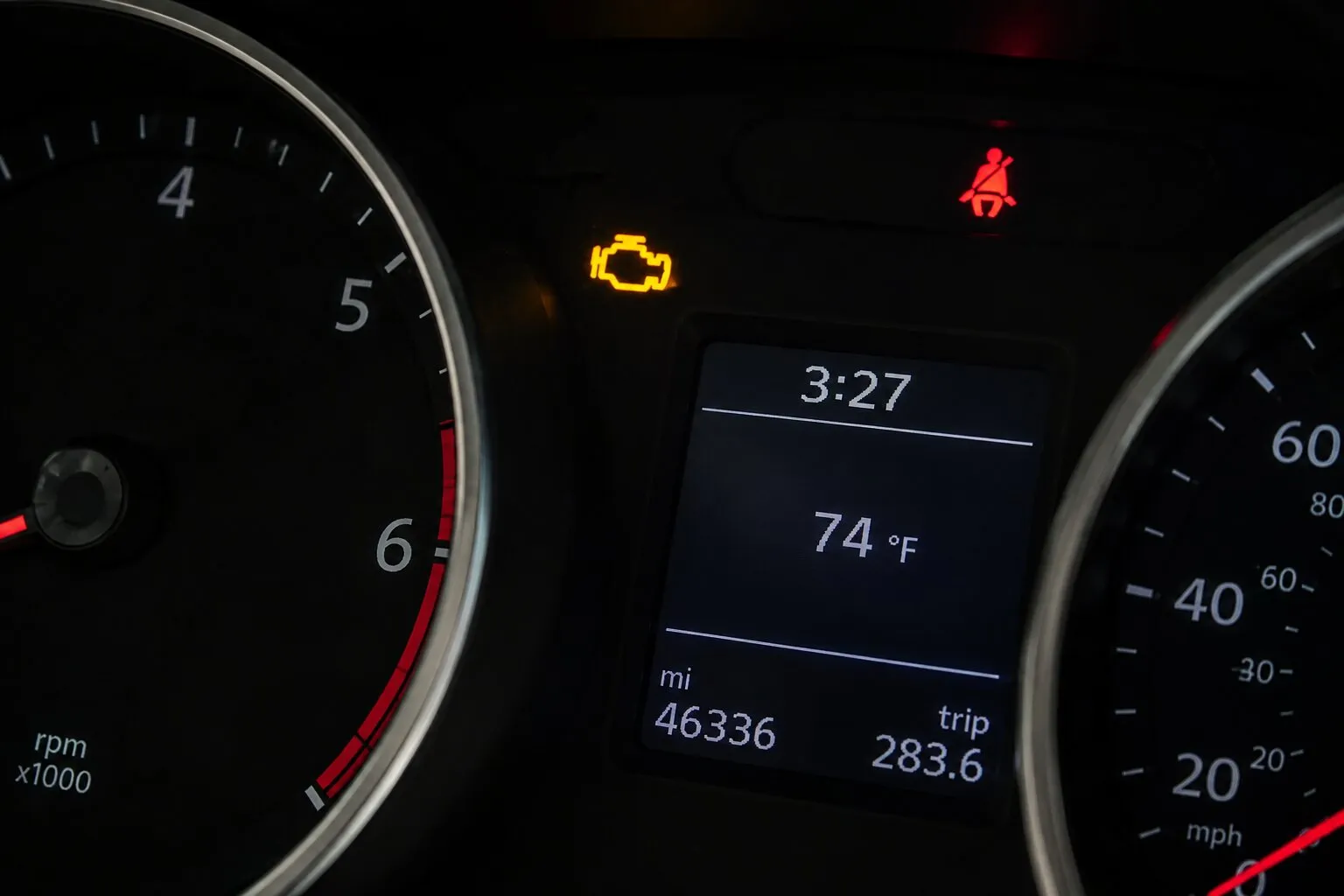
Two lights, one bulb. A steady check engine light and a flashing one mean different things, and the difference decides whether you keep driving. Start there before you start guessing at causes.
A flashing light means stop driving
A flashing or blinking check engine light means the engine is misfiring right now, severely enough that the computer has decided it needs to warn you in the moment rather than log it and tell you later.
A misfire is a cylinder that is not burning its fuel. That fuel does not disappear. It goes out of the exhaust valve as raw fuel and lands in the catalytic converter, which is designed to burn small amounts of leftover hydrocarbons and not a cylinder’s worth. The converter overheats. Its internal substrate can melt and collapse, which blocks the exhaust and turns an ignition fault into a much larger repair. That damage happens in minutes of driving, not weeks.
What to do when it flashes: come off the accelerator, avoid load, do not climb an on-ramp or tow anything, and get to somewhere safe to stop. Shut the engine off. A misfire is often a failed coil pack, a spark plug at the end of its life, an injector, or a wet connector after standing water. All of those are fixable. A melted converter on top of them is the expensive version of the same day.
A steady light means get it read
A steady light is the computer telling you it stored a fault code. The car may drive fine and often will. It still means a monitored system has failed a test, and the number of things it could be is large:
- An evaporative emissions leak, which includes a loose or failed fuel cap
- An oxygen sensor reading out of range, or reacting too slowly
- A mass airflow sensor that has drifted or picked up dirt
- A misfire that is not severe enough to flash the light
- Catalyst efficiency below threshold
- EGR flow faults, thermostat and coolant temperature faults, purge valve faults
A steady light does not mean you have to stop on the hard shoulder. It does mean the car is running on a compromise somewhere, and some of those compromises cost fuel or damage parts while you wait.
Check these three things before you call anyone
The gas cap. Take it off and put it back on until it clicks. Look at the rubber seal for cracks. Evaporative leaks are one of the most common causes of a steady light, and this is the free version of the fix. The light takes a few drive cycles to clear itself.
Any other warning light. An oil pressure light or a temperature gauge in the red is a different category of problem, and it means stop the engine now. The check engine light shares a dashboard with lights that will not wait.
What changed in how the car drives. Rough idle, a stumble under acceleration, a loss of power, a smell of fuel, white or blue smoke, a fan running constantly. Those details narrow a diagnosis faster than the code does, so tell whoever scans the car what you noticed.
Why the code is not the answer
Every fault code names a circuit or a condition. It does not name a broken part. P0171 says the engine is running lean on bank one. The cause might be a vacuum leak downstream of the airflow sensor, a weak fuel pump, a dirty mass airflow sensor, a leaking intake gasket or an exhaust leak upsetting the oxygen sensor reading. Five causes, one code, and only one of them is fixed by the part most people buy.
This is where the money goes on the wrong repairs. A parts store reads the code, the description mentions a sensor, the sensor gets replaced, and the light comes back in a week. The code was accurate. The interpretation was not.
Proper diagnosis reads more than the code. It reads the freeze frame data, which is the snapshot of engine speed, load, coolant temperature and fuel trim recorded at the exact moment the fault set. That tells you whether the fault happened cold or hot, at idle or under load, which is often what separates two of those five causes. Then it tests the circuit rather than replacing it.
The one after a rainstorm
A check engine light that appears after driving through standing water is common in Tampa Bay, and it is worth treating as its own case. Water forced into an intake, a soaked coil connector or a splash into a low-mounted sensor all set codes, and some of them clear once things dry out. Others do not, because water sitting in a connector starts corroding the pins.
The clue is in the freeze frame and in whether it repeats. A one-off that never returns is a wet connector. One that comes back every time it rains is a connector that is now damaged.
Do not clear the code before it gets diagnosed
Clearing the light wipes the freeze frame data and resets the readiness monitors with it. The fault is still there, the evidence is not, and the car has to be driven long enough to set the code again before anyone can work on it. If the light is on, leave it on until it has been read.
What we do with it
We scan at your location, engine and transmission and ABS and airbag together, because a car with one light on often has stored codes in systems the dashboard never mentioned. We pull freeze frame and live data, test the circuit the code points at, and tell you what we found and what it will take to fix. If it is a five-minute answer, we say so.
Estimates are free, and we come to the car. Tell us whether the light is steady or flashing when you call, since that changes how soon we want to see it.
Find out what set it
We read the codes at your car, not at a counter
A full-system scan pulls engine, transmission, ABS and airbag codes along with the freeze frame data recorded when the fault set. We run it in your driveway or your office lot and explain what came back before anything gets replaced.
See mobile vehicle diagnosticsQuestions
Asked at the curb
Can I drive with the check engine light on?
If the light is steady, the car drives normally and no other warning light is on, you can drive to where you were going and book a scan. If the light is flashing, or the car has lost power, or the temperature or oil pressure light is on as well, get off the road and shut the engine down.
My check engine light went off by itself. Is the problem gone?
The fault is still stored. A car turns the light off after a set number of clean drive cycles, but the code and the freeze frame data stay in memory, and an intermittent fault comes back. A scan reads what was recorded even after the light has gone out, which is worth doing before it returns at a worse moment.
Can a loose gas cap really set the light?
Yes. The evaporative system pressure tests itself, and a cap that is loose, cracked or has a perished seal shows up as a leak. Tighten it until it clicks and give the car a few drive cycles. If the light stays on, the leak is somewhere else in the system and it needs finding with a smoke test rather than a guess.
Is a cheap code reader enough to fix it?
A code reader tells you which circuit reported a problem. It does not tell you which part failed. A lean code can be a vacuum leak, a fuel delivery fault or a sensor reading wrong, and buying the part named in the code description is how people end up paying for two repairs. The code is the starting point of the diagnosis.
Book a diagnostic scan
Tell us the vehicle, whether the light is steady or flashing, and what changed in how the car drives. We come to you and the estimate is free.
Monday to Friday, 8:00 AM to 5:00 PM